Vision of the Reaper
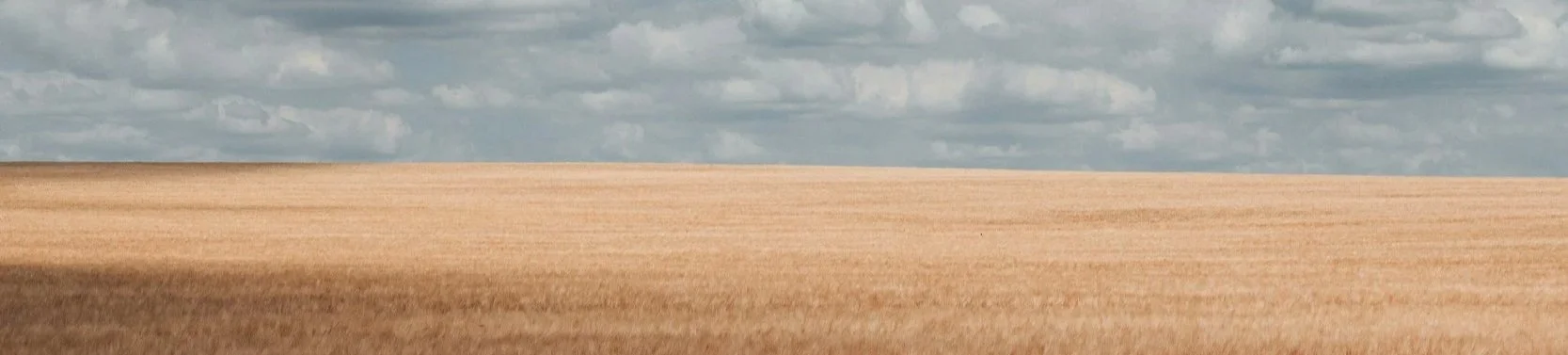
Inspired by The Pearl (1380s) and William Langland’s Piers Plowman (1379).
i.
When my twin was found in a yellow-grained field, a curious feeling overtook my body.
Half of my vision was affected, like the round globe of my left eye was carrying a blurry, unshakable film, and my left arm ached with persistent sores. Back frozen stiff against the straw-stuffed mattress, I had begun to wake before the sun rose. I imagined that the rot, black and steaming, was bleeding from the wooden box where his body laid. I imagined that it tore across the small town, between the cobblestoned, narrowly winding streets, past the church with blaring bells, and that it crawled into the vacant spot under my armpit, right next to my heart, and ate at the right half of my body, crumbling it into ash.
Inside the church, my mother wept soundlessly. The crucifix hung over the entrance to the chancel. If you sat in the pew closest to him, you could see that Jesus’s wooden eyelids were slightly parted. I peered up to match his gaze and prayed, deeply and earnestly, for my brother’s salvation, elbows tucked tightly against either side of my stomach, where I suspected the rot had found its home. My left hand, pressed flat against my right, spasmed oddly.
My brother was the keeper of sheep. He was dearly beloved. He had a kind heart, a gentle demeanor, and his soul was as golden as the field he passed in. I cannot recall the full set of synonyms for his character that I often consulted when describing his lived life. I tread carefully, lest I offend his wife and children’s memory.
They weep alongside my mother. In their display of grief, although they are busy with sorrow, they cast their flurry of accusatory glances at me. I know they wish it had been me, in the yellow-grained field, instead. I pointedly ignore the irony of my brother’s deathbed taking the shape of his place of toil.
Naturally, after his tragic passing, I grew more pious.
In the dim, pained blue of dawn before the sun rose, when my body would paralyze itself in a state between dream and sentience, then—and only then—could I admit to myself that I could not discern the source of my piety. I feared that, if I faltered in my devotion, after my own death, I may not ever see him again. I may have also feared, quietly, that we would have no choice but to meet again, to spend eternity together in Paradise. There was a rotted corner of my chest from where my guilt emanated—I regret to confess that I fervently, passionately feared a union with my perfect brother, since this life, without him, was an exhale of a suffocated breath.
The harvest continued deep into August, despite the storm of grief which muddies time. Occasionally, after I completed my labors of the day, I wandered into my brother’s field, which glowed gold with wheat. I combed the tall stalks for evidence that he had once lived, but I have already forgotten the shape of the indent of his body in the ground.
The sky was unbearably beautiful. God would not have accepted my sacrifice, instead of his—I would not have died in such a spotless place.
I remain unsure about what separated this day from the rest, except that it had been three weeks, exactly, since my brother had passed. The rot’s claim upon the left side of my body and my inescapable paralysis during the blue hour of dawn had taken its toll, and under the blistering afternoon sun, I laid myself down.
ii.
Before my eyes opened, a sweet, sweeping tide of relief cooled my skin. My heavy, weighted body was lifted light within the rushing river, and my limbs bobbed in place.
I blinked, twice—once to clear the water from my eyes, and another time in shock; my blurred left eye no longer troubled me. The chill of the river alleviated my sores, and I clambered to sit upright, bracing my hands against the smooth, flat stones under my legs.
I thought that a placid, tranquil lake had graced my renewed sight, but the water flowed, decisively, from my left to right. The river was wide and impossibly vast—farther up its winding body, small waterfalls cascaded over themselves, spraying a faint mist into the air that glimmered with reflected, jeweled shards of color. The river banks were so far from where I sat that they seemed pressed tightly against the horizon. The surface of the river in my vicinity was as smooth as glass, rippling only when I disturbed it. In it, meeting my own eyes, I could see my brother’s eyes, my brother’s nose, but my mouth twisted, in a sharp, disgusted grimace.
Trees, of a height I had never seen, towered far into the cloudless sky. They crowded the river banks and stretched high, nearly from the riverbed itself, the water lapping gently at their layers of deep umber bark. The leaves were impossibly vibrant—the hue of greens were so deep that they were nearly blue, and some had crimson and orange tones so magnificent that I, on multiple occasions, easily mistook it for burning flame crawling upward to Heaven.
Ahead from where I sat, dumb and mute, the riverbanks hinted at a promise of green and marvelous plenty. I chanced a glance behind me.
I could barely discern the white land from the shimmer of sunlight glistening off of the surface of the river, but the trees stood bowed, withered by the cold and by the heavy burden of ice and snow upon its branches. The banks of the river were completely stiff, so frozen that it appeared drained dry. The deep, dark cracks in the soil gave way to a land of eternal cold—a land of death.
I rose, unsteadily, to my feet, and I distractedly shook the water from my sleeves. The sudden flight of my ailments was inexplicable. The sole sensation of a deep, gutted burning in the pit of my stomach grounded me—I remembered drifting to sleep in the field where my brother had died. As I drifted forward, body leaning towards the land of plenty, I saw him.
He stood on the edge of the river, his wool shepherd’s cloak hanging from his shoulders. He was facing me, but there was no flicker of recognition in his silhouette. The rot in my stomach clawed its way out of the bile and into my chest. Out of obligation, more than longing, I pursued his distant shadow, standing on the riverbed.
iii.
On several occasions, my foot snagged on the stones lodged within the riverbed, and I crashed into the surface of this damned river, which seemed adamant on preventing easy passage. The water coursed through my nose and mouth. I vomited, hoping the river would cleanse me of the rot permeating my organs, but it only burned further, deeper.
Watery, tasteless drool dripping down my chin, I stared down at my own face in the river. I was disgusting. I continued my trek across this wretchedly reflective river. The riverbed grew more treacherous—sharply steep in some areas, while other areas easily gave way to sinking, sucking black mud. As I searched for the right steps between the dark, unforgiving stones below, I couldn’t avoid seeing my own petty expression. The very concern that furrowed my brow infuriated me—what right did I have, to be so worried about my own safety?
I hadn’t ever had time, previously, to address my angry, boiling jealousy—and even then, this was an excuse, since if I had sought to resolve this ugly feeling, I would have made time in my prayer, or in the hour before dawn. As much as I longed to see him, I was glad that my brother had died. My mother was excruciating. From the moment of our birth, I knew that there was not one moment where she believed us equal. She wished that I was more like him—stronger, kinder, more man.
I reaped the harvest, hacking away at stalks of wheat, barely, or rye, and I imagined cutting through his throat with the sickle, myself. A spray of red on gold, and a piercing, aching silence to follow. It was a thought, nothing more, but I knew. I never raised a hand against him, but I thought it, and God knows.
I stared down at my detestable face, at my brother’s eyes in my eye sockets. Out, I wanted to say. Get out!
I stared across the river, at where my brother stood, patiently. Near him, a small herd of sheep with cloud-like, blinding white wool had gathered. My reflection under my feet rippled, taunting. In the strange fog of my self-hatred, I still found myself selfish enough to continue to advance, rather than turn back. I might have preferred a lake of fire—the land of the cold was a primal terror.
Is a river still a river, if it is as wide as it is long?
iv.
I climbed upon the riverbank, and my brother greeted me with a smile and open arms.
“My dear brother,” I said. “I feared I may never see you again. Your journey has been endless. Where do you rest?”
“My dear Reaper of the harvest. My journey cannot have been as long as yours,” he teased, nodding toward the river. “This is Paradise. I rest here.”
A cold shock traveled down my spine. The tightly knitted rot in my chest reared its head.
“This is Paradise?” I repeated, carefully. My brother beamed, proudly.
“God has granted you this gift of sight, even as your heart beats hotly in your body in the living world. A sinner washes away his sins in the river and emerges anew, and God will descend to welcome His children into Heaven. Reaper, I do not doubt that He has chosen you to relay this vision to the living world.”
As my brother spoke, the sheep began to withdraw into the woods. He beckoned to me, but I remained rooted in the ground for a moment. The guilt and raging envy continued to make its rounds in my veins, pumping the black rot into every inch of my flesh. I could not pretend to feel the cleanse that my brother indicated with such certainty. The sin sticking to my bones was stifling me, and closing my throat.
Deeper, past the trees, the turrets of a gleaming crystal palace rose along the skyline, and a road emerged. Familiar and unfamiliar flowers densely lined the cobbled path. Speechless, I wandered past an archway made of curled rivulets of gold, and as I stepped closer to the palace, my feet trod upon precious stones and minerals embedded into the soil below. I drew near, and the sunlight streaming through its stained-glass windows turned the land in front of my very eyes into a dazzling, breathtaking spectacle.
“The Kingdom of God,” I breathed.
I dampened the fear in my chest, that He would see through my flimsy, transparent disguise—I knew, that He knew, that I did not belong here, that I did not deserve to walk alongside my brother. Oblivious to my unease, he continued farther down the path, shouting greetings to beautiful, fresh-faced women dressed in linen tunics. They flitted, like faeries, around the rows of meticulously groomed flowers, and their muffled chatter was interrupted only by the occasional spray from their clay watering pots. The droplets coalesced into charming beads on petals of violets, marigolds, and peonies.
The sight resurfaced a bubble of a memory, of my brother’s young daughter, carrying a watering pot the size of her head, struggling to close her small thumb over the hole on the top to stop the water from dribbling out. The soil had grown increasingly more moist, while the sparse flowers near our cottage remained fairly un-watered. Faint laughter. A hand upon her young head. I frowned.
My brother was nearly at the palace doorstep, and, alarmed, I ran, my feet clipping his heels accidentally.
“Must I greet Him now?” I asked. My hurried speech was indelicate, fearful, and meek, the latter of which my brother detested most. I braced myself.
“You cannot greet Him,” was the reply, and I glanced quickly at my brother’s face. A flash of uncertainty passed over his eyes. “The church is unfinished. We cannot expect God to descend to welcome His children into Heaven until we have demonstrated our piety.”
My words fled me. My gaze darted to a group of men gathered on one balcony of the palace. Their foreheads gleamed with sweat, and in their calloused, clenched fists, they held mallets and chisels.
“God will descend?” I asked.
“Yes, once we have proved ourselves cleansed of sin, and worthy of salvation.”
“I thought all sins were to be cleansed in the river.”
“Yes,” my brother started, then he paused. His next words were delivered in a dangerously clipped tone. “For me, this is Paradise. I overcame my mortal sins in the river, staring at my own face for eternity before I emerged. For some, it may be Purgatory. Some sins can be cleansed. Some cannot.”
“If this is Paradise, when God descends, where will you go?”
I let the tremor of my voice carry this question into the air.
My brother leveled a hard look at me. I could not stop myself from casting these doubts, but his fury made me shrink.
“I will go where you cannot follow.”
He swept away from me, uncharacteristically angry at my rebuttal and at my questions, in a realm where such ugly emotions are not to exist.
A young girl by the archway tripped over her small feet, and the clay pot in her hands shattered into pieces. She moaned in dismay, and her body lay over the broken shards. After a moment, she began to pick the sharp edges out of her hands. She did not bleed, but she did not seem happy, either.
God is not here.
I had not known that my brother felt the same way I did, about myself.
v.
At the altar of the church, a woman stood, tall and poised. Her gentle face was upturned, toward the array of light streaming through the crystal windows. Her hands were interlocked in prayer. I swept past the people weeping in the pews—out of joy or anger or sadness, it was impossible to discern. They mouthed their prayer in unison with her voice. She only grew more angelic as I drew close.
Through a flicker of her dark lashes, she cast her eyes down to me. Even if I had been sitting in the pew closest to her, I would not have been able to tell that her marble-like eyelids had been parted at all.
“What do you seek, child?”
The depth of the woman’s large, cowlike eyes was endless. Dark pools of glass.
“Who built this church?” I asked.
“This church was built centuries before you were conceived. The Faith in our Lord built this sanctuary from the barren, flat ground. As one of four daughters of God, we govern this land until He deems humanity worthy to walk alongside.”
“And who are you?”
“Mercy,” said she, and her smile was brilliant. “Justice lies on the other side of the river, in the bitter land of cold. I believe you may have felt her presence with you on the river. Farther to the east, and farther to the west, my other sisters reside. In the heart of our Paradise, I deliver the word of God to the pious.”
I sat, dumbfounded. Her voice was melodious in a manner I could not conceive, and when she rippled across space, not a movement was wasted. The cloth draped around her shoulders and waist trembled like a pair of clipped wings were tied to her back. I stilled when she reached toward my stony face, her fingers caressing my rough cheeks.
“You are dreaming,” she said, and it was no question.
“Yes,” I said. “Where is God?”
“God is here,” she said, and she touched the space above my breast.
“If this is Paradise, where is God?”
Mercy beckoned me into an elaborately adorned chancel. I noticed that a crucifix was missing from the upper beam of the altar. I thought it unusual, until I remembered that the church was unfinished.
vi.
“This land is Paradise. People do not go hungry. No ailments cause suffering. Families are reunited, and those that have lived fruitfully rejoice in their lives and deaths.”
“I don’t understand. If God is not here…”
“God is here. If you have lived faithfully, if you have lived loving your neighbor, feeding the poor, honoring your father and mother, God is here. If you hold love in the center of your chest, God is here.”
“I do not. I cannot. I have been suspecting that there is a type of rot that eats away at my body. In the waking world, my limbs behave erratically, stiffly. On occasion, I worry that the sickle in my hand will impale itself between my ribs while I work under the blistering sun. I recall that my twin brother is no longer living, and I do not feel torment.”
“Do you want to love, and to be loved?”
“I cannot.”
“You do. Then that is enough. Mercy exists for all—for those that falter in their devotion, for those that doubt, for those that regret. The Lamb embraces all. You are loved because you are God’s beloved child. You live and learn, even after death.”
“I am afraid,” I confessed. “I am afraid that this Paradise is real. That God is not real, and that this Paradise exists without Him in it. I am afraid that God is real, that He is coming, but that I will not be worthy.”
“My dear. Faith has always been blind. If you must believe that I am a daughter of God, an angel of Mercy, believe it so. If you must believe I am a woman who passed, a century prior, who was strangled to death at the hands of a furious husband, who understands the suffocation of life as a woman who cannot read, believe it so. Live with love, whether that leads you to Christ or away.”
I had one more question.
“Does God exist for you, here?”
Mercy smiled sadly, and shook her head.
vii.
My body seized with the familiar sores, and a cry burst from my throat as I woke. The afternoon sky was still bright. Broken stalks of wheat dug into my shoulder blades. Despite myself, furious tears streamed over my sunburnt cheekbones, and my chest heaved.
Though my body ached, the rot had disappeared. My heartbeat rushed loudly in my ears. I could imagine my brother’s eyes, in my eyesockets, drinking in my life along with me.
I was a reaper of the harvest, a reaper of my own sowing, and I was a woman who could not read. I clasped my hands, closed my eyelids over my brother’s eyes, and I prayed to him in Heaven.